
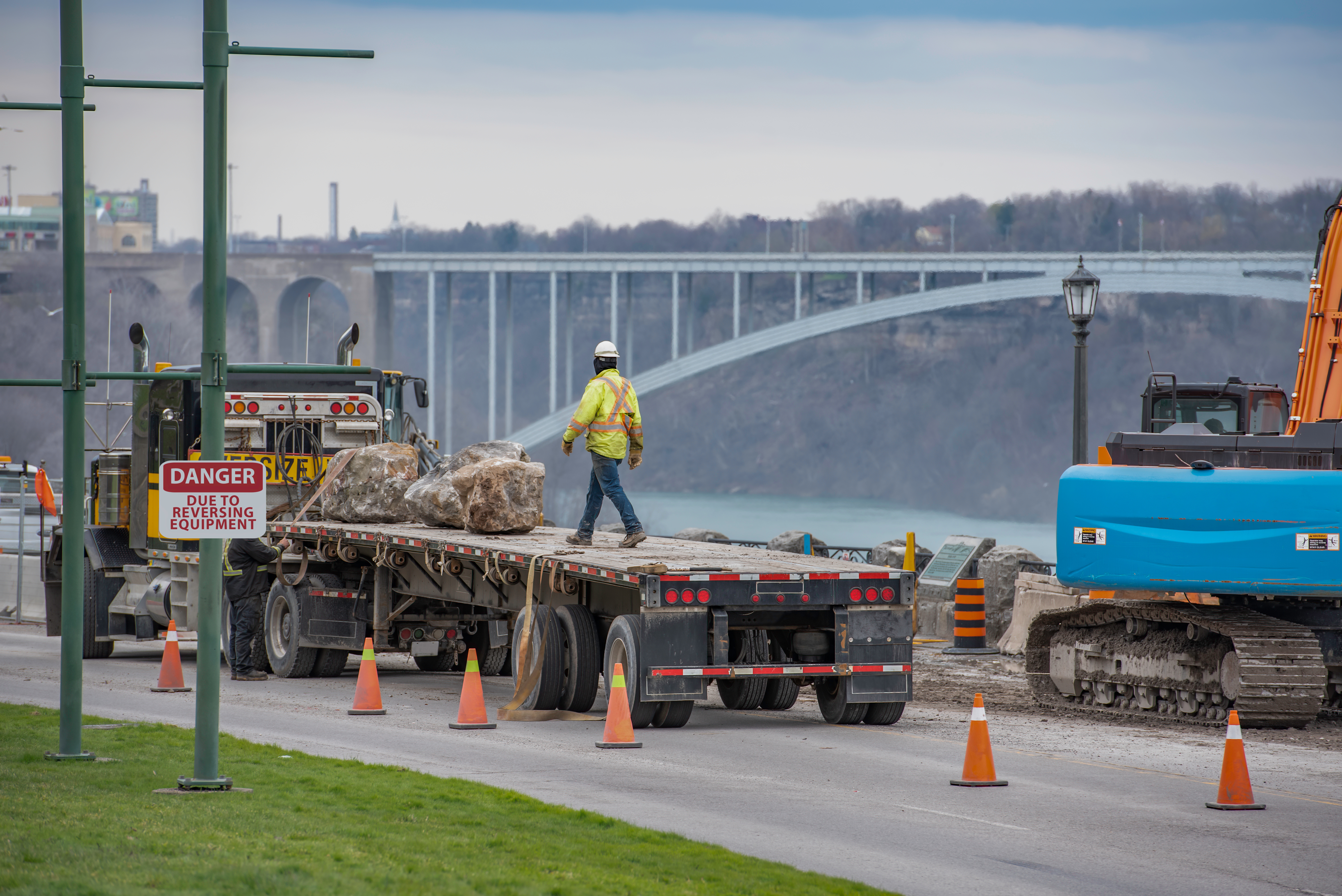
Loading and unloading materials from flatbed trailers remains one of the most dangerous activities in transportation and material handling. For employers operating in high hazard industries, these tasks introduce serious exposure to struck by incidents, falls, shifting loads, and powered industrial truck events. Many severe injuries and fatalities occur during routine flatbed operations that are often viewed as standard or low risk.
At Berkley Industrial Comp, workers compensation is all we do. We partner with employers who understand that disciplined processes, clear communication, and consistent safety practices are essential to protecting workers and controlling loss. Flatbed safety is no exception.
Why Flatbed Trailer Operations Are High Risk
Flatbed trailers lack the physical containment of enclosed trailers, which increases the likelihood of loads shifting or rolling during loading and unloading. Workers are often required to remove securement, reposition materials, or assist equipment operators in close proximity to unstable loads. These conditions create predictable and preventable hazards.
Common causes of flatbed injuries include loads shifting when straps or chains are removed, broken or inadequate dunnage, slippery surfaces from rain or ice, and workers positioning themselves in unsafe areas near the load. Falls from trailer decks are also frequent, especially when employees climb onto trailers unnecessarily or without proper fall protection.
Forklift and telehandler incidents add another layer of risk. Unchocked or uncoupled trailers can move during entry, leading to trailer separation, tip overs, or loss of load control. Poor communication between operators and ground personnel further increases the chance of a serious struck by event.
Key Safety Risks to Address
Effective flatbed safety programs begin with recognizing the most common hazards.
Struck by and roll off hazards occur when pipes, bundles, coils, or crates shift unexpectedly, especially during strap removal or uneven lifting.
Load instability results from damaged banding, broken dunnage, improper blocking, or environmental conditions that reduce friction.
Falls from trailers happen when workers climb onto decks unnecessarily or work near exposed edges without fall protection.
Forklift and dock incidents occur when trailers are not properly restrained or stabilized during loading and unloading.
Communication failures between operators and spotters often lead to workers standing in unsafe positions or entering active work zones at the wrong time.
Safe Practices for Loading and Unloading Flatbed Trailers
Reducing flatbed incidents requires a methodical approach built on planning, stabilization, and discipline.
Control the work area by establishing a clearly defined exclusion zone around the trailer. Only essential personnel should be allowed inside this zone. Workers should never stand in areas where loads could fall or roll.
Stabilize the trailer before any loading or unloading begins. Set truck brakes and use wheel chocks or vehicle restraints every time. Uncoupled trailers should be supported with rated trailer jack stands to prevent tipping.
Inspect the load before removing securement. Look for shifted materials, broken bands, damaged blocking, or missing dunnage. Lower tiers should be reblocked or chocked before top tier securement is removed.
Remove straps and chains in a controlled sequence. Never remove all securement at once. Keep restraints in place until the section being unloaded is stable. Workers should face the load at all times during strap removal.
Use proper lifting practices. Forklifts and telehandlers should operate from the same side as any assisting personnel. Workers must remain clear of blind spots and pinch points. Only trained and authorized operators should handle powered industrial trucks.
Minimize time spent on the trailer. Whenever possible, tasks should be performed from ground level using appropriate tools. If work at heights is required, fall protection must be provided in accordance with OSHA requirements.
Verify equipment condition before use. All tie downs, chains, straps, and anchor points must meet applicable working load limits. Damaged or worn equipment should be removed from service immediately.
Why Consistent Flatbed Safety Matters
Flatbed incidents are rarely random events. They follow predictable patterns that include rushed work, removed restraints too early, poor communication, or unsafe positioning. When these patterns repeat, serious injuries and fatalities follow.
By establishing clear work zones, stabilizing trailers, inspecting loads, and enforcing disciplined unloading sequences, employers significantly reduce the likelihood of catastrophic losses. These practices not only protect employees but also help control workers compensation costs and improve overall operational performance.
Berkley Industrial Comp Commitment to Safety
Berkley Industrial Comp specializes exclusively in workers compensation for complex, high hazard industries. Our underwriting, claims, and risk services teams work together to support employers with practical guidance that reflects real world conditions.
We believe safety programs must be clear, consistent, and actionable. Flatbed loading and unloading safety is a critical focus area for many of our insureds, and proactive risk management in this space delivers measurable results.
For more safety insights, training resources, and industry specific guidance, visit our website and explore how disciplined risk management supports safer operations and stronger outcomes.