
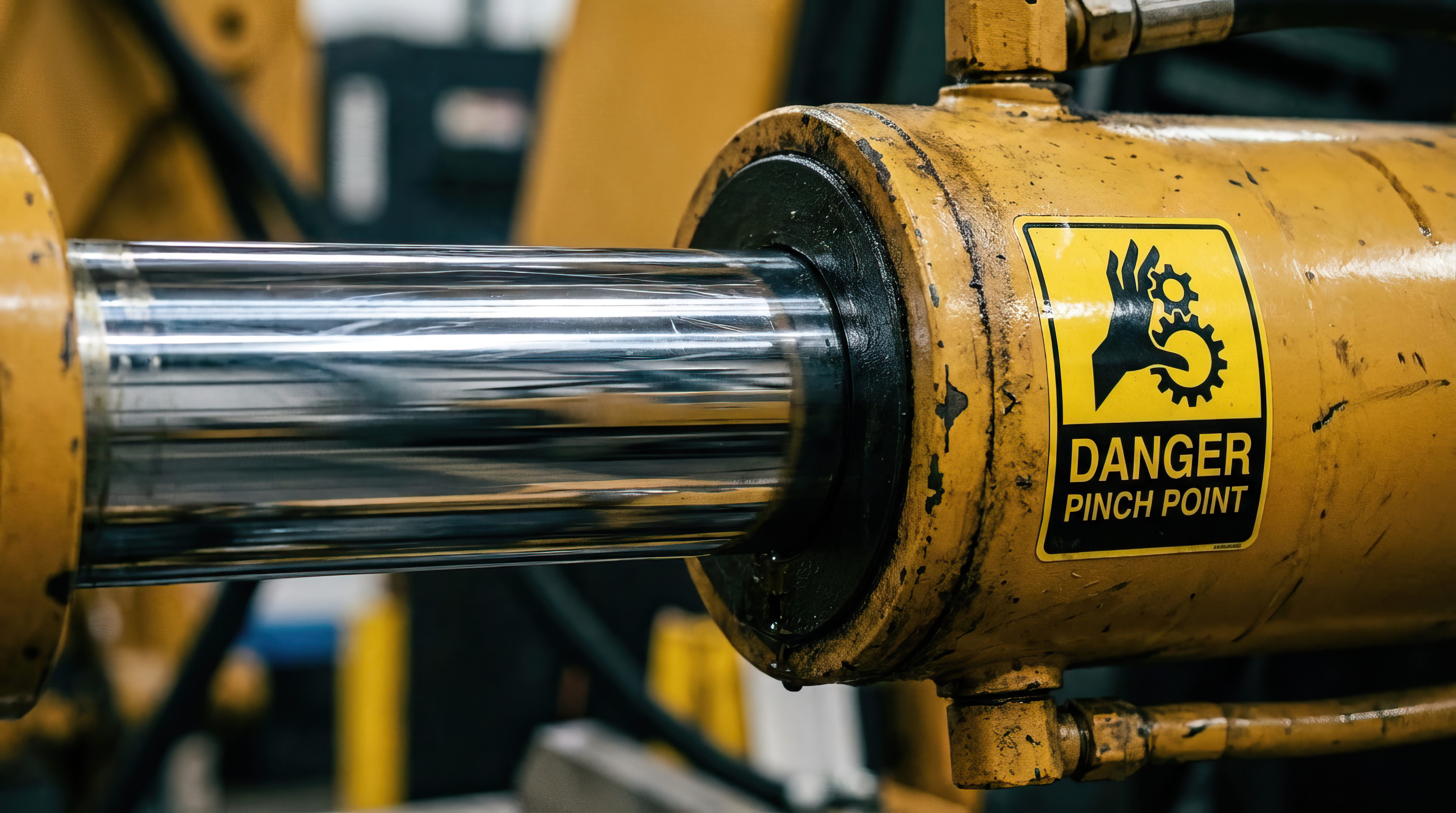
Pinch points exist in nearly every mechanical system. Any place where a moving part meets a stationary object has the potential to trap a hand, finger, or limb. When that space closes, the result can be severe. Fractures, amputations, and life‑changing injuries occur in an instant.
A recent incident reinforces this reality. An employee suffered a finger injury when equipment shifted unexpectedly, trapping his hand against a stationary surface. After reviewing the circumstances, it became clear the injury could have been avoided with the proper tool and safer positioning.
For insureds operating in demanding environments, understanding pinch point hazards is essential. These risks are common, but they are manageable with the right awareness and habits. As a trusted partner in high‑hazard industries, Berkley Industrial Comp focuses on real‑world prevention strategies that help protect your teams and keep operations running safely
What is a Pinch Point?
A pinch point is any area where a person could be caught between moving and fixed parts of equipment. If a body part occupies that space at the wrong time, the force generated by the machine will always win. Identifying these areas early reduces the chance of sudden, serious injury.
Why Pinch Point Awareness Matters
High‑risk industries rely on equipment that moves, shifts, lifts, or presses. Even routine motions can become hazardous when attention slips or when the wrong tool is used. The recent injury case underscores a key truth: most pinch point injuries are preventable when hazards are recognized and addressed before work begins.
Key Safety Practices to Reduce Pinch Point Risks
These safety fundamentals should be part of every job, every day:
- Use the right tool for the job
- Improvising with the wrong tool places hands and fingers dangerously close to pinch points. Purpose‑built equipment keeps distance between workers and moving parts.
- Identify pinch point hazards in your work area
- Before starting tasks, scan for places where movement occurs or could occur. Look for areas where moving equipment meets a stationary object.
- Ask the critical question: “What will happen if this moves?”
- If an object shifts, swings, rotates, or drops, consider whether you might be in its path.
- Pay attention to close‑contact hazards
- Pinch points often occur where equipment is placed near a pipeline, wall, dock, or another fixed structure. If a load moves unexpectedly, will you or a coworker be in the way?
- Keep hands and feet out of “between” spaces
- Stay alert anytime your body is between two objects. Even slow‑moving equipment can cause serious injury.
- Discuss pinch point hazards during risk assessments and toolbox talks
- Hazards change with conditions, tasks, and equipment. Talking through them improves awareness across the crew.
- Keep your hands where you can see them
- Hidden hands are at greater risk. Maintain clear visibility whenever reaching, guiding, or adjusting.
- Never operate machinery without required guards
- Machine guards exist for a reason. They are designed specifically to prevent contact with pinch points and operational danger zones.
- Avoid placing any part of your body in a pinch point area
- When reaching into equipment or retrieving a tool, confirm that all moving parts are secured or locked out. If not, reposition yourself or fix the hazard before moving forward.
A Shared Commitment to Safer Workplaces
For insureds, preventing injuries is about protecting people and keeping operations stable. For agents, it is one more way to reinforce the value of working with people who understand the realities of high‑hazard work.
Berkley Industrial Comp’s approach is built on unmatched expertise and a deep commitment to working together to promote safety. Our guidance is grounded in real‑world risk and practical ways to reduce it, helping both insureds and agents support safer, stronger workplaces.
Download the whitepaper using the button below.
Berkley Industrial Comp is providing this material for informational purposes only; it does not constitute legal advice or professional consulting services. Berkley Industrial Comp makes no representations or warranty regarding the accuracy or completeness of this material and expressly disclaims any liability for errors, omissions, or inaccuracies. Employers and other recipients should seek independent legal advice before making decisions based on this material.